New Forest Volunteer Ecological Surveyor Programme - April 2026 activities summary

Russell Wynn, 05 May 2026
The New Forest Volunteer Ecological Surveyor Programme (VESPA) reconvened after the Easter holidays, with four group surveys and a training session all delivered in the second half of April. The group surveys are already demonstrating the benefits of having multiple pairs of eyes (and ears!) in the field, and have generated some fantastic records of priority species. It's been great to see the survey participants sharing experience and benefitting from the informal training, whether they be beginner or expert. An illustrated summary of April activities is provided below, while further details about VESPA, including registration information, are available here.
VESPA Group Survey on 15 April 2026
13 participants gathered for an exploration of restored heathland and wetland habitats in the eastern New Forest. Several Firecrests and Redstarts were singing in the retained woodland blocks, and it was encouraging to hear singing Woodlarks in each of the three recently restored heathland units. A Dryad’s Saddle fungus was found on deadwood, and Dung Roundead and Minotaur Beetle were found associated with pony dung. Damp areas contained several plant species that are currently nationally red-listed as Vulnerable, including Three-lobed Crowfoot, Marsh Pennywort, and Marsh-marigold. One of the retained woodland blocks contained a surprising abundance of regenerating Rowan, Silver Birch, Scots Pine, and Beech saplings, which provided habitat for several Wood Crickets.

VESPA participants watching a singing Woodlark
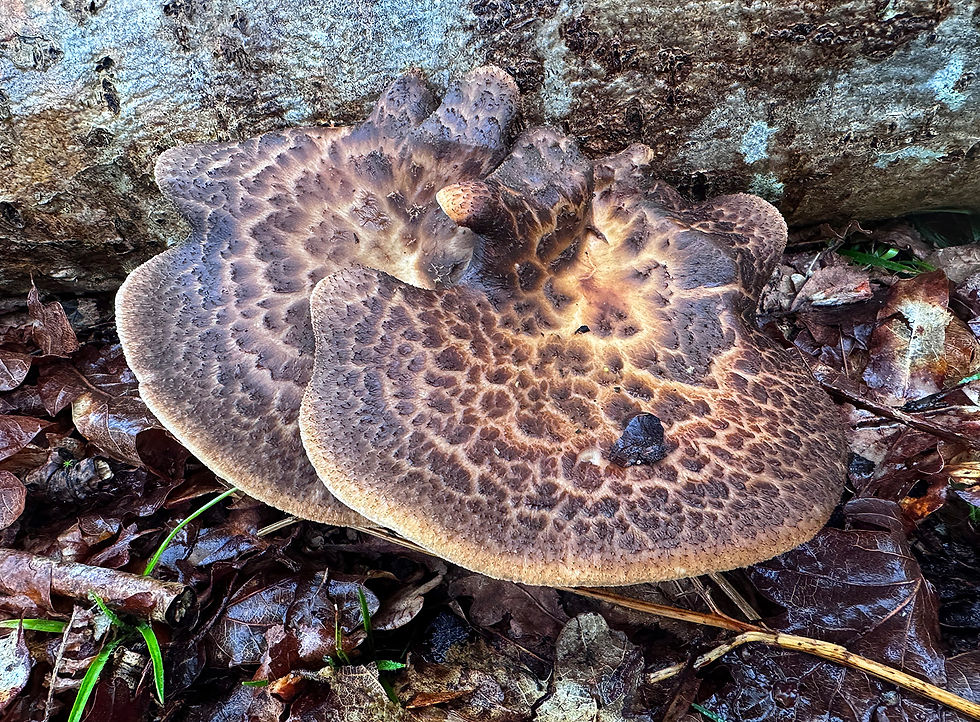
Dryad's Saddle fungus on fallen deadwood
The group then explored the edges of an established area of damp heathland and found several Bog Beacons as well as Marsh Valerian and Petty Whin. A pair of Curlews and several Stonechats were on territory and a couple of Heath Tortrix Acleris hyemana and several Red Poplar Leaf Beetles Chrysomela populi were found.
The much-needed biscuit break at 1100 hrs was very productive, with a male Goshawk seen hunting in riverine woodland, a specimen of the nationally scarce Red-bodied Click Beetle Ampedus quercicola found amongst deadwood, and a nationally scarce female Large Velvet Ant Mutilla europaea found amongst heather. The riverine woodland itself contained abundant Butcher’s Broom and produced a calling Lesser Spotted Woodpecker, Holly Parachute fungus, and the attractive soldier beetle Malthodes marginatus (or similar).

Red-bodied Click Beetle (Ampedus quercicola)

Large Velvet Ant (Mutilla europaea)
The return walk over an area of drier sandy heathland produced a pristine specimen of the nationally scarce Heath Goldsmith beetle Carabus nitens and a brief distant view of a Raven, while an exposed sandy bank hosted a colony of Sandpit Mining Bee Andrena barbilabris and its parasite Sandpit Blood Bee Sphecodes pellucidus, as well as Sand Bear-spider Arctosa perita.

Heath Goldsmith (Carabus nitens)

VESPA participants searching a sandy bank for invertebrates
VESPA Group Survey on 19 April 2026
A team of ten VESPA participants arrived on site in the central New Forest on a wonderful sunny spring morning, with the aim of exploring nearby restored heathland and wetland habitats. A block of mixed woodland produced several singing Firecrests, Woodcock, Crossbill, and a singing male Wood Warbler that was carrying colour rings - subsequent consultation with the ringer (Tony Davis) revealed it had been ringed in the New Forest in 2023 and had returned to the Bolderwood area in 2024 and 2025. A couple of sizeable specimens of Hoof Fungus on a dead standing Beech tree contrasted with the many tiny Bog Beacons seen in ditches alongside the track.

Bog Beacons
A restored stream produced the hoped-for Brook Lampreys, although the spawning season appeared to be over with just one freshly dead specimen and two live individuals watched swimming around rather aimlessly. The stream also held several nationally scarce River Skaters and a pair of Grey Wagtails, while a Common Lizard was glimpsed in bankside vegetation.

Dead Brook Lamprey
The group then emerged onto an area of heathland and woodland edge, where singing Woodlark and Tree Pipit were noted, and Peregrine, Sparrowhawk, and several Buzzards were seen overhead. A calling Dartford Warbler was heard, and Green Tiger Beetle and Common Heath moth were seen. A nationally scarce Heath Dumble Dor Trypocopris pyrenaeus (a dung beetle) was captured as it blundered along a woodland ride, allowing detailed images to be obtained that confirmed the ID.

Heath Dumble Dor dung beetle
A routine check beneath a chunk of conifer deadwood in an area of restored boggy habitat revealed several unusual-looking pupae within a black ant colony. Subsequent correspondence on the VESPA WhtasApp group suggested they were the pupae of ant hoverflies Microdon, and the association with black ants enabled ID confirmation as the nationally scarce Heath Ant Fly Microdon analis.
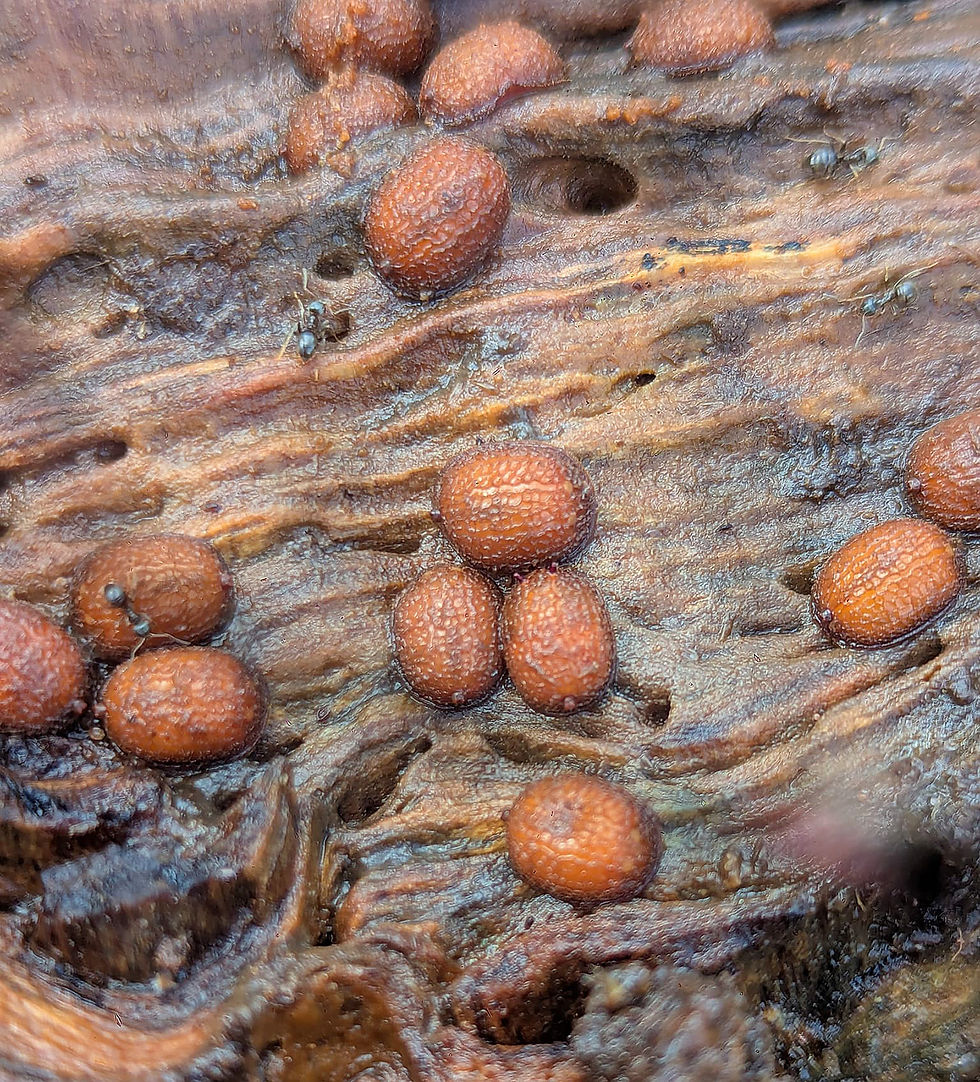
Heath Ant Fly pupae with Black Ants in attendance
A small, secluded pond in adjacent woodland hosted several Large Red Damselflies, and the margins held Three-lobed Crowfoot and Marsh Pennywort. A forestry track nearby contained some deep wheel ruts that had filled with water, and these also held Three-lobed Crowfoot in addition to a couple of Palmate Newts and a small Grass Snake, highlighting the ecological value of ground disturbance.

VESPA participants photographing a Grass Snake in a flooded wheel rut

Grass Snake
VESPA Training Session on 23 April 2026
A full house of 15 attendees enjoyed an informative evening delivered by Colleen and Paul Hope of Hampshire Bat Group / Ecological Consultancy Services, and hosted by Amanda Barton of Tilefield Nature. The training was focussed on acoustic bat detection, but also included an introduction to bats and their status in the New Forest, and an overview of some of the projects that Colleen and Paul are leading locally including ongoing work on Bechstein's Bat, Barbastelle, and Greater Horseshoe Bat.

Colleen Hope presenting to the VESPA attendees
The group then moved outside at dusk to listen (and look) for bats using various detectors and imagers, although the cool conditions meant that only a few detections of common species were logged. Encouragingly. several attendees have recently purchased acoustic detectors, or are in the process of buying one, and the intention is also to make one or two detectors available on loan this summer as part of VESPA. Consequently, there may be a follow-up VESPA training session focussed on processing and analyisis of bat acoustic data.
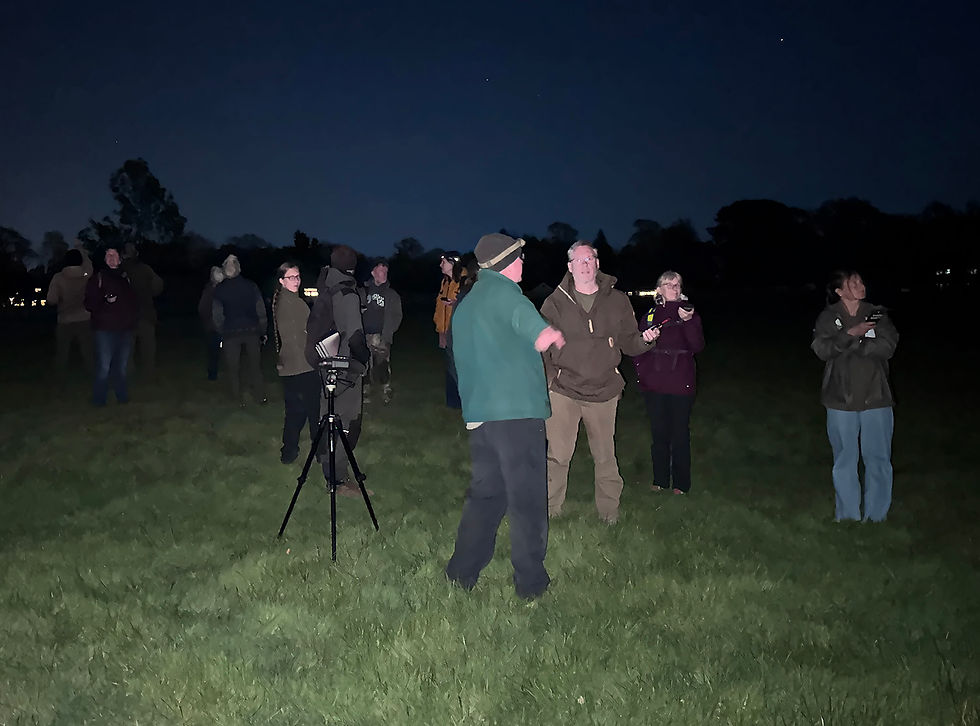
VESPA participants using acoustic detectors and thermal imagers
VESPA Group Survey on 25 April 2026
Another glorious sunny morning greeted 13 VESPA participants, whose primary focus for the survey was deadwood habitats in ancient Beech and Oak woodland. Three singing Firecrests, several Redstarts, a distant Cuckoo, and a Tawny Owl flushed from a day roost were the avian highlights, while a Red-belted Bracket fungus on a fallen Beech, a newly developed False Puffball slime mould, and a nice clump of Petty Whin (nationally red-listed as Endangered) on adjacent damp heathland provided additional interest.

Red-belted Bracket on fallen Beech
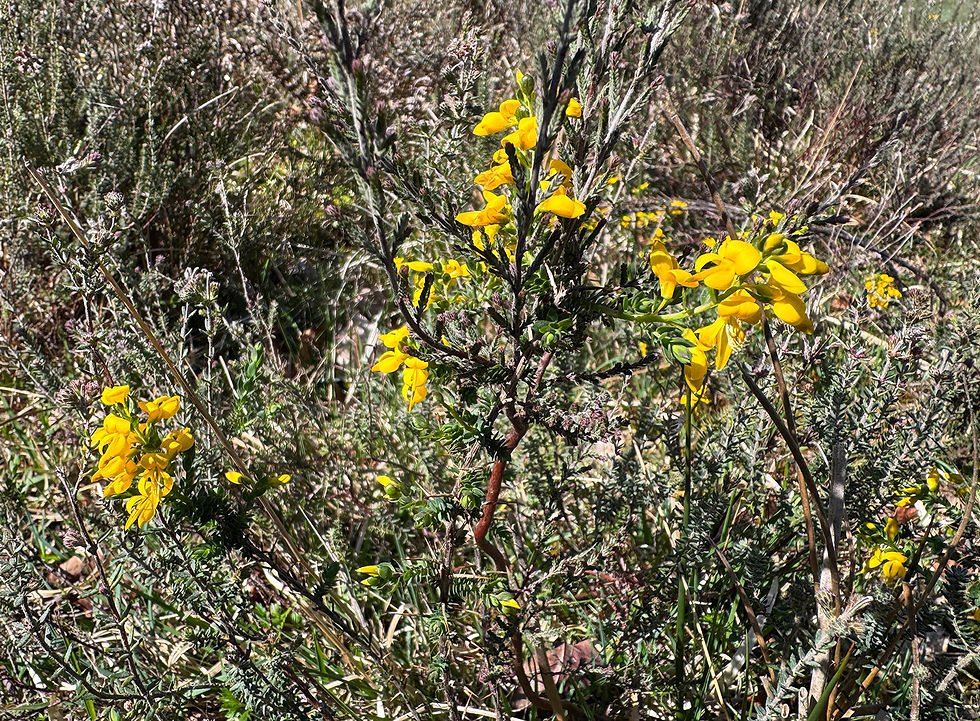
Petty Whin
The cool start meant that there was limited invertebrate action early on, with a tiny juvenile Raft Spider on a Bramble leaf, a Wood Cricket scuttling amongst leaf litter, and a ‘wild’ Honeybee colony found high up in a standing Beech tree being of note. A few common hoverfly species started to appear as the sun’s warmth penetrated open clearings, and one observer photographed a specimen of the nationally scarce hoverfly Grey-shouldered Sap-eater Brachyopa pilosa.

Andy Murdock talking to VESPA participants about the Green Forest Hoverfly survey
The final hour of the survey then produced several nationally scarce species in quick succession. A small stream bordering the woodland held several River Skaters, but attention soon turned to a hoverfly on a logjam in the stream that was soon confirmed as a male Logjam Hoverfly Chalcosyrphus eunotus. This is only the third Hampshire and New Forest record, following one found earlier in the week and a previous record in 2023 (coincidentally, the observers of those two records were involved in the finding of this latest record).

Logjam Hoverfly (Chalcosyrphus eunotus)
On the walk back to the car park a Marsh Click Beetle Actenicerus sjaelandicus, a Heath Ant Fly Microdon analis, and a Red-bodied Click Beetle Ampedus quercicola were logged. Many of the group then attended the kick-off meeting for the 2026 Green Forest Hoverfly hunt over lunch in Burley, and two members subsequently went on to find Green Forest Hoverflies later in the day, the first modern records for April.

Heath Ant Fly (Microdon analis)
Comments